Security Lighting — A Practical Guide
Simple, practical advice for choosing and using outdoor security lights around a UK home
Quick Start: What You Need to Know in 60 Seconds
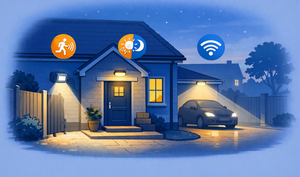
Security lighting helps you see people, vehicles and obstacles around your home after dark. It can make entrances safer, reduce convenient hiding places and help cameras capture clearer pictures.
Well‑placed lighting can act as a quiet deterrent by removing hiding places and increasing the chance that movement will be noticed. Lighting works best when combined with simple routines like locking doors, closing gates and keeping entrances clear.
The simplest upgrades:
- A safe only protects what you actually put inside it, so choose enough space for current and future needs.
- Secure fixing to a solid structure is often more important than the safe’s thickness or rating.
- Fire safes and security safes do different jobs. Choose the protection you need.
- Insurance ratings matter when storing cash, jewellery or other high‑value items.
- For carers or tradespeople, use a key safe independently tested and recognised by Secured by Design.
- Keep the safe out of casual view. An obvious safe attracts attention.
- Never leave a safe key, override key or written code nearby.
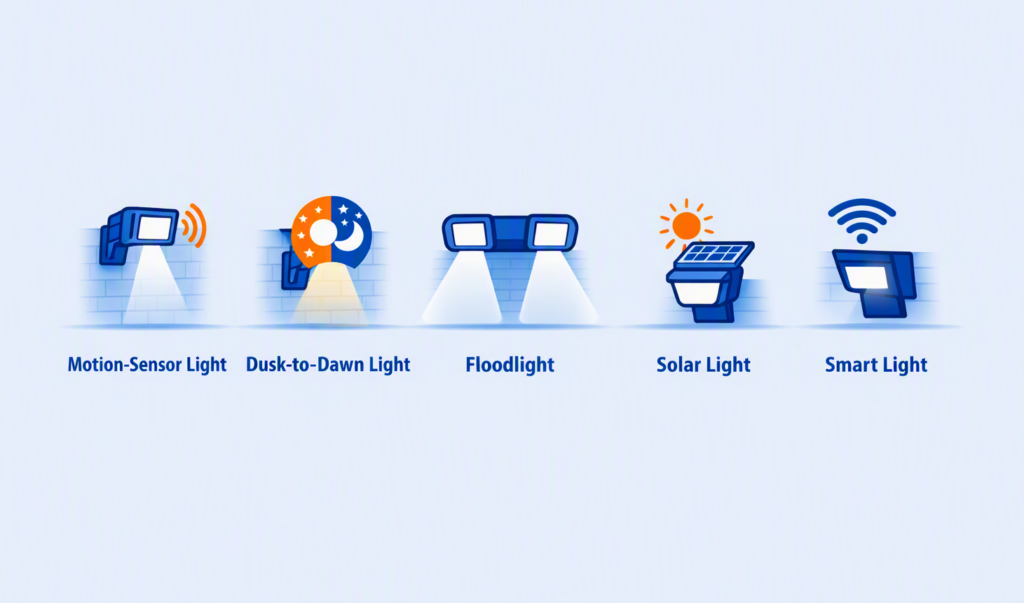
Main types at a glance: use motion-sensor lights where people approach, dusk-to-dawn lights at entrances, floodlights for wider areas, solar lights where wiring is difficult, and smart lights when you want schedules or remote control.
What Security Lighting Is (and Isn’t)
Lighting is only one part of home security. It does not replace strong locks, secure gates, an alarm, cameras or sensible routines such as closing windows and locking doors. It doesn’t stop crime on its own, but it increases visibility and makes it harder for someone to approach unnoticed, which can discourage opportunistic behaviour.
Security lighting is outdoor lighting placed to improve visibility around entrances, paths and other vulnerable areas. A well-positioned light can reveal movement, remove dark hiding places and help you find keys or walk safely.
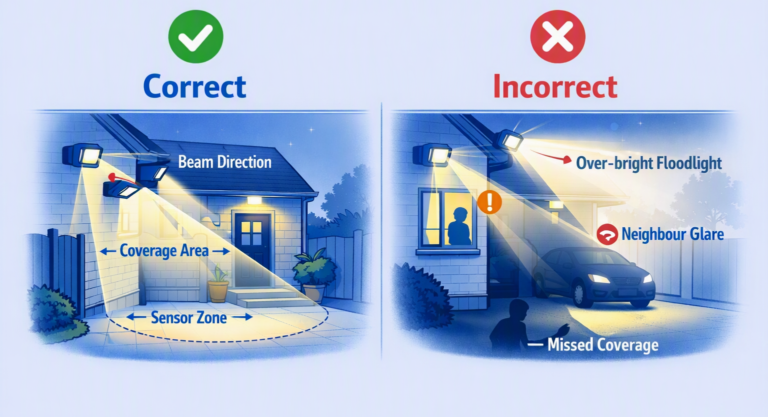
More light is not always better. An excessively bright or badly aimed lamp can create glare and deep shadows, disturb neighbours and make it harder for you—or a camera—to see. The aim is to light likely approach routes and useful viewing areas, not the whole garden.
When Security Lighting Helps
- Side paths and rear gates: light narrow routes and access points that are difficult to see from the house.
- Driveways: make people, vehicles and trip hazards easier to spot.
- Dark corners and blind spots: reduce areas where someone could remain unnoticed.
- Arriving home after dark: make entrances, steps and keyholes safer and easier to use.
- CCTV and video doorbells: improve the visible detail available to a camera, provided the light does not shine directly into its lens.
- Giving an occupied appearance: scheduled or smart lights can make a home look lived-in when you are away.
Types of Security Lighting
Motion-Sensor Lights
These switch on when a built-in sensor detects movement. They are a good choice for driveways, side paths, rear doors and gates. Look for adjustable detection range, sensitivity and on-time so passing animals or traffic do not trigger the light constantly
Dusk-to-Dawn Lights
These turn on automatically when it becomes dark and remain on until daylight. They suit entrances and porches where low, steady lighting is useful. Choose a modest brightness to limit energy use and disturbance.
Floodlights
Floodlights spread light across a larger area such as a broad driveway or yard. Use them carefully: a powerful lamp aimed badly can cause glare, create harsh shadows and annoy neighbours.
Solar Lights
Solar lights are useful for sheds, gates and places without a convenient electrical supply. Performance depends on battery quality, daylight and panel position, so winter running times may be shorter.
Smart Lights
Smart lights may offer schedules, remote control and links with cameras or other devices. They are convenient but may require reliable Wi-Fi, an app, an account or a subscription. If you prefer simplicity, a standard sensor light may be the better choice.
Placement and Installation Basics
- Mount lights high enough to discourage tampering, but not so high that they only illuminate roofs, walls or the tops of heads.
- Point the beam downwards and keep it within your property wherever possible.
- Cover paths, gates, steps and entrances rather than lighting a blank wall.
- Place motion sensors so a person crosses the detection zone; this often works better than someone walking directly towards the sensor.
- Keep lights out of a camera’s direct line of sight and test the picture at night before fixing the final angle.
- Keep cables, junctions and fittings tidy, secure and suitable for outdoor use.
Electrical safety: fixed mains wiring should be installed or checked by a competent electrician. Always follow the manufacturer’s instructions and applicable UK electrical requirements.
Common Mistakes to Avoid
- Mounting lights too high or too low: this can leave important areas dark or make the fitting easy to tamper with.
- Using over-bright floodlights: glare can reduce visibility instead of improving it.
- Lighting only the house: include the routes people use to approach doors, gates and garages.
- Relying on lighting alone: combine it with good locks, secure boundaries and everyday routines.
- Ignoring plants: shrubs and branches can block the beam, move in front of sensors or cast deep shadows.
- Skipping a night-time test: walk the area after dark and check what you and any cameras can actually see.
Buying Guidance
Choosing the Right Lighting for Your Home
Start with the place you need to light, not the product. Ask whether you need constant light or light only when movement is detected, whether wiring is available, and whether the light must help a camera. Decide early if you want app-based features or a straightforward fitting with no account or subscription.
Brightness
Choose enough light to see the area clearly without dazzling people or creating strong reflections. LED fittings use far less energy than older halogen floodlights and are now standard for most security lighting.
Sensor Quality
Look for controls for detection range, sensitivity, daylight level and the length of time the light stays on. These settings help reduce false triggers from animals, trees, pedestrians or passing vehicles.
Colour Temperature
Neutral white light, around 4000–5000K, gives clear visibility and usually works well with cameras. Very cool light can look harsh and may feel uncomfortable for neighbours.
Power Source
- Wired: dependable and suitable for regular use, but installation may require an electrician.
- Solar: easy to place where wiring is unavailable, but dependent on sunlight and battery capacity.
- Battery: simple to install and useful for occasional use, but batteries need checking and replacing or charging.
Build Quality
Choose an outdoor-rated fitting suitable for UK rain and temperature changes. Check the manufacturer’s weather-resistance rating, warranty and expected working temperature. Metal housings can feel robust, while good-quality plastic can resist corrosion.
Adjustability
A movable lamp head and adjustable sensor make it easier to cover a path or entrance precisely. This also helps you keep stray light away from windows and neighbouring property.
Legal Considerations
Aim and control outdoor lights so they do not become a nuisance or interfere with neighbours’ enjoyment of their property. Use the lowest practical brightness, point light downwards, restrict operating times where suitable and speak to neighbours if a fitting may affect them.
Top 10 Security Lights
See my Top 10 Security Lights list →
Checklist: What to consider When Buying
- What area am I trying to illuminate?
- Do I need motion-activated or constant light?
- Is wired, solar or battery power most practical?
- Will the light help my CCTV or video doorbell at night?
- Is the brightness appropriate for the size of the space?
- Is the sensor reliable and adjustable?
- Can I angle the light towards paths and entrances?
- Could the light cause glare or disturb neighbours?
- Is the fitting suitable for UK weather?
- Do I want smart features, or would a simple light be easier to use?
Final tip: after installation, test the light from the street, the approach route, inside the home and through any camera view. Small adjustments often make a bigger difference than extra brightness.