How to Protect Your Home – A Practical Guide
Clear, practical advice to help you protect your home without stress, complexity or unnecessary cost.

Why home security matters
Our home should be a safe space: a place where, we can relax and feel secure. It is where we spend time with our families, where children can play freely, and where we should be able to switch off from the outside world.
Our home is often the most expensive purchase most of us will ever make. It also stores many of our most prized possessions, irreplaceable keepsakes and memories.
Our home often contains our most important documents, devices and passwords, which in the wrong hands could allow a criminal to steal our identity.
While the saying “your home is your castle” is a perfectly valid expectation, most homes need a little help to become truly secure. The good news is that with practical guidance and small, actionable steps, it is possible to make your home safer for you and your family.
In this guide, I will walk you through how to protect your home step by step, with clear and practical advice that anyone can implement.
What burglars actually look for
Most burglars are looking for opportunity, not difficulty. They are more likely to target a home that appears empty, has weak doors or windows, provides hiding places, or makes it easy to get in and out without being noticed.
Common warning signs include unlocked doors or windows, poor lighting, overgrown shrubs, visible valuables, easily accessible tools or ladders, and obvious signs that nobody is home.
Common mistakes people make
Many home security problems occur from simple habits rather than a lack of expensive equipment. The most common mistakes are easy to fix once you know what to look for.
- Forgetting upper-floor windows, side gates, garages and sheds.
- Leaving doors unlocked while at home, in the garden or only popping out briefly.
- Assuming burglars only break in at night.
- Hiding keys outside under pots, mats or in obvious places.
- Letting bushes, fences, bins or side passages create hiding places.
- Relying only on alarms or cameras instead of basic prevention.
- Leaving valuables, documents, car keys or devices visible from windows or doors.
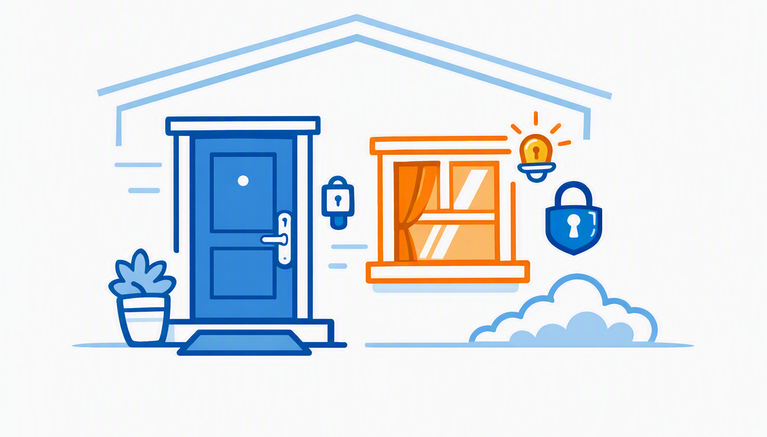
Doors and locks
Doors are one of the first places to check when improving home security. A strong door, good-quality locks and consistent locking habits can make a major difference.
- Check the condition of your front, back and side doors.
- Use suitable locks for the type of door you have.
- Lock doors even when you are at home or in the garden.
- Keep keys away from letterboxes, cat flaps and visible areas.
- Consider upgrading locks where doors feel weak or outdated.
Windows
Windows are another common access point, especially downstairs windows, windows above flat roofs and windows hidden from view. Good habits and simple checks can reduce the risk quickly.
- Close and lock windows before leaving the house.
- Check accessible windows, including those near extensions, bins or flat roofs.
- Keep window keys out of sight but accessible in an emergency.
- Avoid leaving valuables, laptops or charging cables visible through windows.
Lighting
Lighting helps remove hiding places and makes a home look less attractive to opportunistic burglars. It also makes everyday movement around your property safer at night.
- Use motion-sensor lights around entrances, side paths and rear access points.
- Keep shrubs and bushes trimmed so lighting can reach vulnerable areas.
- Use timer switches indoors when you are out in the evening.
- Avoid leaving dark, hidden routes around gates, sheds and garages.
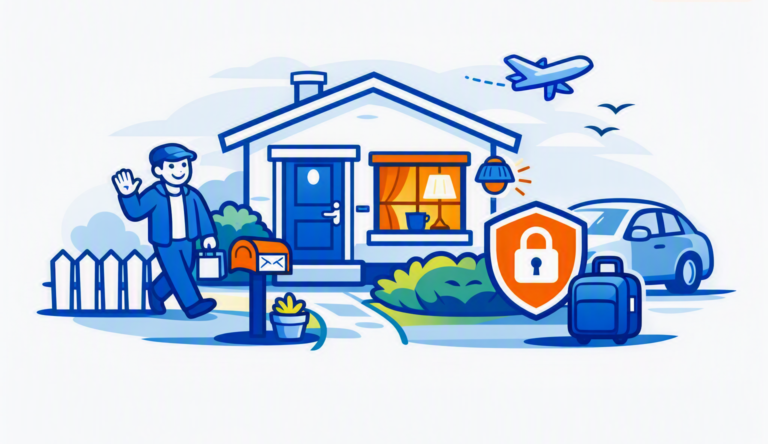
Making your home look occupied
A home that looks occupied is less appealing than one that looks empty. Small routines can help create the impression that someone is in, even when you are away for a few hours or a few days.
- Use lights on timers, especially during darker months.
- Ask a trusted neighbour to keep an eye on the property when you are away.
- Do not advertise holidays or absences publicly on social media.
- Cancel or manage regular deliveries so they do not build up outside.
- Keep the garden and outside areas tidy so the home does not look neglected.
Protecting valuables and documents
Home security is not only about stopping someone from entering. It is also about reducing the damage if something does go wrong. Important documents, identity information, sentimental items, devices and passwords should be protected carefully.
- Keep passports, financial documents and identity paperwork in a secure place.
- Store sentimental items somewhere less obvious than bedside drawers or hallway cupboards.
- Keep car keys, house keys and spare keys out of sight.
- Consider a suitable safe for documents, jewellery or irreplaceable items.
- Back up important digital files and protect devices with strong passwords.
Securing your home when you’re away
Before leaving the house, build a simple exit routine. The aim is to avoid forgetting the basic checks that make the biggest difference.
- Close and lock all doors and windows.
- Double-lock doors where possible.
- Move valuables, documents and keys out of sight.
- Set your alarm if you have one.
- Lock side gates, garages and sheds.
- Use timers for lights if you will be out after dark.
Low-cost upgrades that actually work
You do not need to spend a fortune to make your home safer. In many cases, low-cost changes and better habits provide a strong first layer of protection.
- Improve your locking routine.
- Trim bushes and remove hiding places.
- Move valuables and keys out of sight.
- Use plug-in timer switches for lights.
- Secure ladders, tools, sheds and side gates.
- Add simple lighting to dark entrances or side paths.
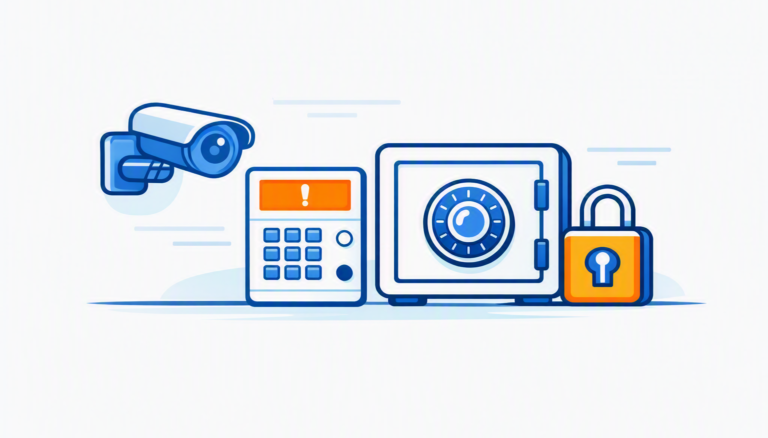
When equipment helps: alarms, CCTV, safes and key boxes
Equipment can strengthen your home security, but it works best when it supports good everyday habits rather than replaces them. Think of alarms, cameras and safes as layers that sit on top of strong doors, locked windows, good lighting and sensible routines.
Here’s when each type of equipment is genuinely useful:
Intruder alarms
An alarm adds a layer of detection and can alert you, neighbours or a monitoring service if something happens. It is most helpful if your home is often empty, poorly overlooked, or contains higher-value items.
→ Read the intruder alarm guide
CCTV cameras and video doorbells
Cameras help you see what’s happening around entrances, driveways, side paths and gardens. They can deter opportunistic behaviour and provide useful visibility, especially if your home is set back from the road or has vulnerable access points.
→ Read the CCTV and video doorbell guide
Safes
A safe protects important documents, jewellery, sentimental items and identity information. It reduces the impact if someone does get inside your home by keeping your most valuable or sensitive items secure.
→ Read the safe guide
Key boxes
A key box provides controlled access for trusted people such as carers, relatives or tradespeople. It must be high quality, securely installed and used with a strong code routine.
→ Read the key box guide
Security lighting
Security lighting helps remove hiding places and makes it easier to see what’s happening around your home after dark. It’s one of the simplest upgrades you can make, especially for side paths, entrances and rear access points.
→ Read the security lighting guide
Quick checklist
- Lock doors and windows every time you leave.
- Keep keys, documents and valuables out of sight.
- Use lighting to remove hiding places.
- Make your home look occupied when you are away.
- Secure gates, sheds, garages, ladders and tools.
- Review whether alarms, CCTV, safes or key boxes would genuinely help your situation.
Summary
I hope you have found this guide useful and now feel better equipped to start securing your home. You do not need to implement everything at once. The important thing is to start with small, practical steps that make your home safer one improvement at a time.
Securing your home is not necessarily about spending lots of money. It is about understanding what matters most to you, reducing easy opportunities and building sensible routines. Start with the basics, then add equipment where it genuinely helps.
About me
I’m Lasse, a security expert with 25 years’ experience in the industry. I’ve led security teams for major companies, supported people through crises, and seen first-hand how simple, common-sense steps can prevent many incidents before they happen.
I’m also a husband and father, and I care deeply about helping people keep their loved ones safe. Over the years, I’ve helped friends and family improve their home security, protect their belongings and feel more confident about their safety.